Gum Health Guide - Olathe, KS
Bleeding Gums Are Not Normal: What Olathe Patients Should Know
Quick answer
Bleeding gums are a sign of bacterial infection, not a sign that you brushed too hard. Healthy gums do not bleed. Caught at the gingivitis stage, the condition is fully reversible with a professional cleaning. Once it becomes periodontitis, the bone loss is permanent and can only be managed. If your gums bleed regularly, get evaluated rather than waiting for pain. Dr. Warya at Mur-Len Family Dentistry in Olathe, KS can help. Call (913) 353-4001.
Almost every week, someone sits down at Mur-Len Family Dentistry in Olathe, KS and mentions, almost in passing, that their gums bleed a little when they floss. They are usually surprised when we treat it as significant. It has been happening long enough that it started to feel like a normal part of brushing.
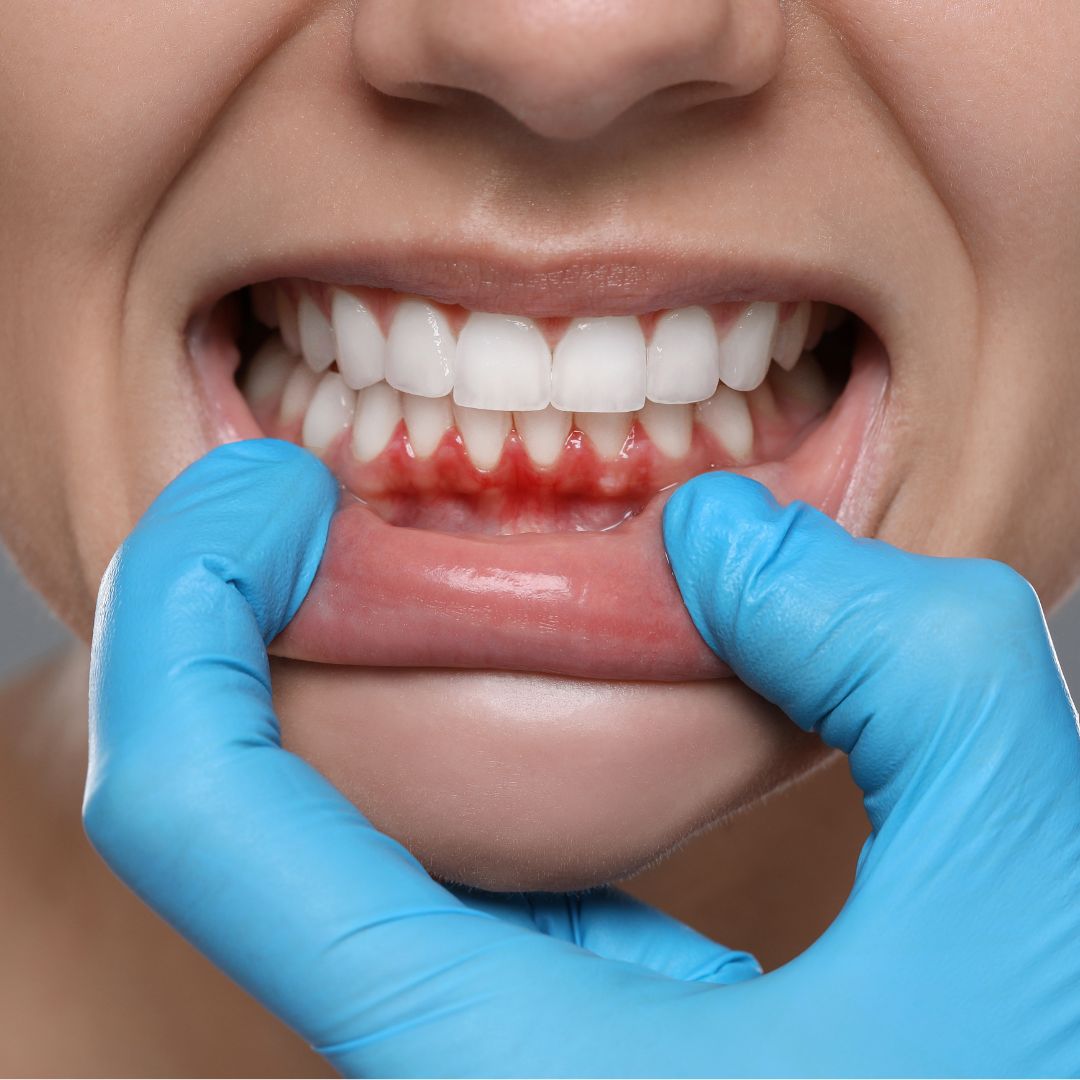
It is not. Gum tissue that bleeds is inflamed tissue, and inflamed tissue means bacteria have built up along and below the gumline. Nothing else in the body gets a pass on this. If your hands bled every time you washed them, you would not conclude that you were washing too vigorously.
Why bleeding gums get ignored for years
Gum disease is largely painless in its early and middle stages. There is no throbbing tooth and no sensitivity to cold, nothing that interrupts your day. The disease can advance for years while producing only symptoms that are easy to explain away: a little blood in the sink, gums that look slightly puffy, breath that does not improve with brushing.
That silence is the actual danger. By the time gum disease produces symptoms people find alarming, such as teeth that feel loose or have visibly shifted, the underlying bone loss has already happened and cannot be reversed.
The stages of gum disease, in plain terms
How gum disease progresses and what can still be done at each stage
| What is happening | What you might notice | Reversible? | |
|---|---|---|---|
| Gingivitis | Infection is confined to gum tissue. No bone loss yet. | Bleeding when brushing or flossing, redness, puffiness | Yes, fully |
| Mild to moderate periodontitis | Infection spreads below the gumline. Bone and ligament loss begins. | Often nothing obvious. Pockets deepen, bone loss shows on X-rays | No, but manageable |
| Severe periodontitis | Significant bone loss. Deep pockets and root involvement. | Loose teeth, receding gums, discomfort when chewing | No, needs active management |
| Advanced periodontitis | Extensive bone loss and compromised chewing function. | Mobile teeth, shifting bite, possible tooth loss | No, often requires specialist care |
Warning signs worth a phone call
- Bleeding when brushing, flossing, or eating firm foods
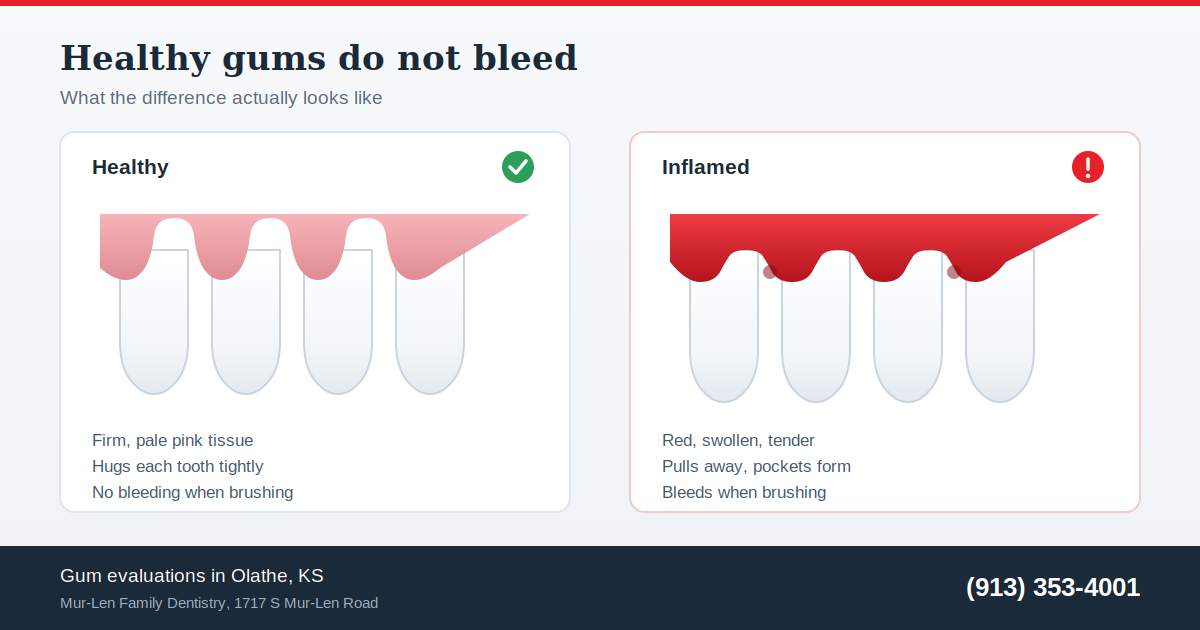
- Red, swollen, or tender gums rather than firm and pale pink
- Teeth that look longer than they used to, or exposed root surfaces
- Persistent bad breath that does not resolve with brushing or mouthwash
- Loose teeth or a bite that feels different than it did
- Gaps opening up between teeth and gums
- Partial dentures that stopped fitting the way they used to
How gum disease is actually diagnosed
A visual check is not a gum evaluation. Plenty of patients with real bone loss have gums that look unremarkable from the outside. Proper assessment uses a periodontal probe to measure the space between each tooth and the gum tissue at several points around every tooth. One to three millimeters is healthy. Four or more means a pocket has formed where tissue has pulled away from the root.
What you should expect: those readings, combined with digital X-rays showing bone levels and notes on bleeding, recession, and tooth mobility, are what determine your stage and your treatment. You should be shown the numbers and told what they mean, not simply handed a treatment plan.
What treatment involves
For gingivitis: a thorough professional cleaning and specific guidance on home care. This genuinely resolves the problem, and the tissue returns to health.
For periodontitis: scaling and root planing, a deeper cleaning done under local anesthesia that removes hardened deposits from below the gumline and smooths the root surfaces so tissue can reattach. It is usually completed across two visits.
Afterward: patients move onto a maintenance schedule of every three to four months rather than every six. This is not an upsell. Bacteria measurably recolonize below the gumline within roughly 90 to 120 days, and the tighter interval is what keeps the disease from advancing. You can read more on our gum disease treatment page or about routine visits on our teeth cleaning and preventive care page.
Not sure whether your gums are healthy?
Only pocket measurements and X-rays can answer that. Dr. Warya will walk you through your readings honestly, explain what they mean, and recommend only what your gums actually need.
When a periodontist is the right call
Mur-Len Family Dentistry is a general and family dental practice. Dr. Warya treats gingivitis and many mild to moderate periodontitis cases here, with scaling, root planing, and ongoing maintenance, alongside the rest of your dental care.
Cases involving advanced bone loss, gum grafting, surgical pocket reduction, or regenerative procedures are referred to a periodontist, a specialist who completes additional residency training in exactly those areas. You should expect a straight answer about which category you fall into, based on what your probing depths and X-rays actually show.

Why gum health connects to the rest of your health
Research over the past two decades has reported associations between untreated periodontal infection and several systemic conditions, including cardiovascular disease, difficulty controlling blood sugar in diabetes, adverse pregnancy outcomes, and respiratory infection. The proposed mechanism is that bacteria and inflammatory proteins from diseased gum tissue enter the bloodstream.
These are reported associations, and the strength of the evidence varies by condition. What is not in dispute is that treating the infection in your mouth is worth doing on its own terms. If you are managing diabetes, are pregnant, or have a cardiac history, mention it, because it genuinely affects how your care is planned and sequenced.
Serving Olathe and Johnson County
Mur-Len Family Dentistry provides gum evaluations, cleanings, and periodontal treatment at 1717 S Mur-Len Road in Olathe, with Saturday appointments available by appointment only. The practice serves Olathe and the surrounding Johnson County communities including Overland Park, Lenexa, Shawnee, Gardner, and Spring Hill.
Get your gums evaluated in Olathe
If your gums bleed, the useful next step is a real evaluation with pocket measurements, not another six months of waiting. New patients welcome.
Frequently asked questions
Is it normal for gums to bleed when you brush or floss?
No. Bleeding gums are not normal, and in most cases they are not caused by brushing too hard. Healthy gum tissue is firm and pale pink and does not bleed under normal brushing or flossing. Bleeding means bacteria have built up along the gumline and triggered inflammation. It is the earliest warning sign of gum disease and the one most often ignored. If your gums bleed regularly, have them evaluated. Dr. Warya at Mur-Len Family Dentistry in Olathe can help. Call (913) 353-4001.
What is the difference between gingivitis and periodontitis?
Gingivitis affects only the gum tissue and is fully reversible with a professional cleaning and better home care, because no bone has been lost yet. Periodontitis is the later stage, where infection has spread below the gumline and destroyed bone and the ligaments holding teeth in place. That bone loss is permanent. Periodontitis can be stabilized and managed long term, but it cannot be undone, which is why catching it early matters. Dr. Warya at Mur-Len Family Dentistry in Olathe can determine your stage. Call (913) 353-4001.
How do dentists check for gum disease?
A visual look is not enough. Proper evaluation uses a periodontal probe, a thin calibrated instrument, to measure the space between each tooth and the surrounding gum tissue at several points around every tooth. One to three millimeters is healthy. Four or more means a pocket has formed. Those readings are combined with digital X-rays showing bone levels plus notes on bleeding, recession, and tooth mobility. Dr. Warya at Mur-Len Family Dentistry in Olathe will show you your numbers. Call (913) 353-4001.
What is scaling and root planing?
Scaling and root planing is the standard non-surgical treatment for periodontitis, done under local anesthesia. Scaling removes hardened bacterial deposits from tooth surfaces above and below the gumline, including inside the pockets. Root planing then smooths the exposed root surfaces so bacteria have fewer places to reattach and gum tissue can heal back against the tooth. It goes deeper than a routine cleaning and is usually split across two visits. Mur-Len Family Dentistry in Olathe offers this treatment. Call (913) 353-4001.
Will I be referred to a periodontist?
It depends on what your evaluation finds. Mur-Len Family Dentistry is a general and family dental practice. Dr. Warya treats gingivitis and many mild to moderate periodontitis cases in-house with scaling, root planing, and ongoing maintenance. Cases involving advanced bone loss, gum grafting, surgical pocket reduction, or regenerative work are referred to a periodontist, a specialist with additional residency training in those procedures. You will be told clearly which category you are in. Call (913) 353-4001.
How often do gum disease patients need cleanings?
Patients being managed for periodontitis are usually seen every three to four months instead of every six. The reason is biological rather than commercial: bacteria recolonize below the gumline over roughly 90 to 120 days, and the shorter interval keeps bacterial levels below the point that drives further bone loss. Your exact interval depends on severity and how your tissue responds. Dr. Warya at Mur-Len Family Dentistry in Olathe will explain your schedule. Call (913) 353-4001.
About Mur-Len Family Dentistry
Mur-Len Family Dentistry is a full-service dental practice in Olathe, KS, providing comprehensive family, cosmetic, and restorative dentistry for patients of all ages across Johnson County. To schedule a visit, call (913) 353-4001.
Medical sources
- American Dental Association (ADA) - gum disease and periodontal health
- American Academy of Periodontology - staging and treatment of periodontitis
- Centers for Disease Control and Prevention (CDC) - periodontal disease surveillance
This article is for general educational purposes and is not a substitute for professional dental advice, diagnosis, or treatment. Gum disease can only be diagnosed by a clinical exam and X-rays. Always consult Dr. Navkiran Warya or a qualified dentist about your specific situation.