What Happens During a Professional Dental Cleaning? Everything You Need to Know
If it’s been a while since your last dental cleaning, you may be wondering what actually happens when you sit in the dental chair. Is it painful? How long does it take? Does a professional dental cleaning really make a difference if you brush and floss every day?
A professional dental cleaning is much more than simply making your teeth feel fresh and polished. It is an important part of preventive oral healthcare that helps remove plaque and tartar, support healthy gums, and give your dental team an opportunity to identify potential problems early.

According to the CDC, more than 40% of U.S. adults report having felt pain in their mouth within the previous year, while more than 80% of people have had at least one cavity by age 34.
Understanding what happens during a professional dental cleaning can make your appointment feel more comfortable and help you understand why regular preventive care matters.
Quick Answer: What Happens During a Professional Dental Cleaning?
During a professional dental cleaning, a dental hygienist typically evaluates your oral health, removes plaque and hardened tartar from your teeth, cleans between and around the teeth, polishes the tooth surfaces, and may apply preventive treatments such as fluoride when appropriate. Your dentist may also perform an examination to check for cavities, gum disease, damaged restorations, or other concerns. The exact steps vary depending on your oral health. Patients with periodontal disease or significant tartar buildup may require a deeper cleaning rather than a routine preventive cleaning.
What Is a Professional Dental Cleaning?
A professional dental cleaning is a preventive dental procedure performed by a trained dental hygienist or dental professional to remove plaque, tartar, and other deposits that regular brushing and flossing cannot completely eliminate.
Plaque is a sticky film of bacteria that continuously forms on your teeth. If it isn’t removed effectively, it can harden into tartar, also called calculus.
According to the American Dental Association, hardened tartar cannot be removed effectively with regular brushing and requires professional cleaning. Tartar buildup can also contribute to gum inflammation and gingivitis.
A professional cleaning helps address these deposits while supporting your daily oral hygiene routine.
Why Is Professional Dental Cleaning Important?
Even people who brush twice a day and floss regularly can develop plaque and tartar in areas that are difficult to reach.
Professional cleanings can help:
- Remove hardened tartar
- Reduce plaque buildup
- Support healthy gums
- Clean difficult-to-reach areas
- Reduce the risk of gingivitis
- Help maintain fresh breath
- Make it easier to maintain good oral hygiene
- Give your dental team an opportunity to monitor changes in your oral health
Professional cleaning doesn’t replace brushing and flossing. Instead, it complements your daily routine.
The Connection Between Cleaning and Gum Health
Gum disease is one of the most common oral health conditions in the United States.
The CDC describes gingivitis as the mildest form of gum disease, with symptoms that can include red, swollen, or easily bleeding gums. More advanced periodontal disease can involve bone loss and is a major cause of tooth loss.
Regular professional cleanings can help control plaque and tartar, while your dental team can monitor your gums for signs that additional treatment may be necessary.
What Happens During a Professional Dental Cleaning?
The exact process can vary from one dental practice to another, but a typical cleaning may involve several steps.
Step 1: Review of Your Dental and Medical History
Before beginning, your dental team may review your health history and ask about any changes since your last appointment.
This information matters because certain medical conditions, medications, and lifestyle factors can affect your oral health.
Tell your dental team if you have recently experienced:
- Tooth sensitivity
- Gum bleeding
- Tooth pain
- Dry mouth
- Changes in medications
- Pregnancy
- New medical conditions
- Jaw discomfort
- Changes in your oral hygiene routine
Being open about these changes helps your dental team provide more appropriate care.
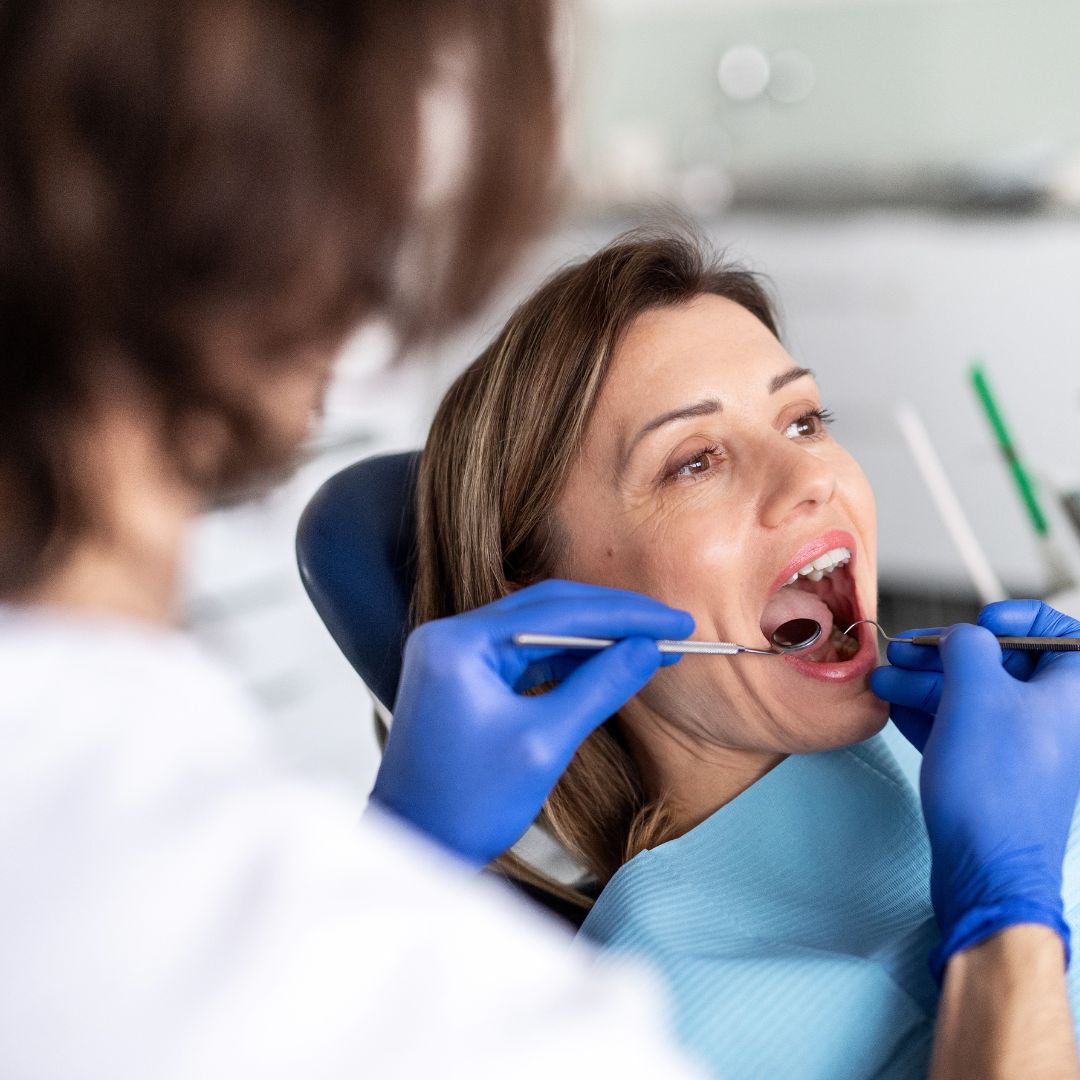
Step 2: Oral Health Examination
Depending on the practice and appointment type, the dental team may examine your teeth and gums before or during the cleaning.
The evaluation may look for:
- Plaque and tartar
- Gum inflammation
- Cavities
- Receding gums
- Tooth sensitivity
- Damaged fillings
- Worn crowns
- Cracked teeth
- Other changes in your mouth
Your dentist may also perform an oral cancer screening as part of a comprehensive dental examination.
The goal isn’t simply to clean your teeth. It is to understand the condition of your oral health and identify issues that may require attention.
Step 3: Measuring Gum Health
For some patients, the dental team may evaluate the spaces between the teeth and gums, known as periodontal pockets.
This can help determine whether there are signs of gum disease.
Healthy gums generally fit closely around the teeth. Deeper pockets can be associated with periodontal disease and may require additional evaluation or treatment.
If your dental team notices signs of periodontal disease, a routine cleaning may not be sufficient.
Step 4: Removing Plaque and Tartar
This is the part most people think about when they hear “dental cleaning.”
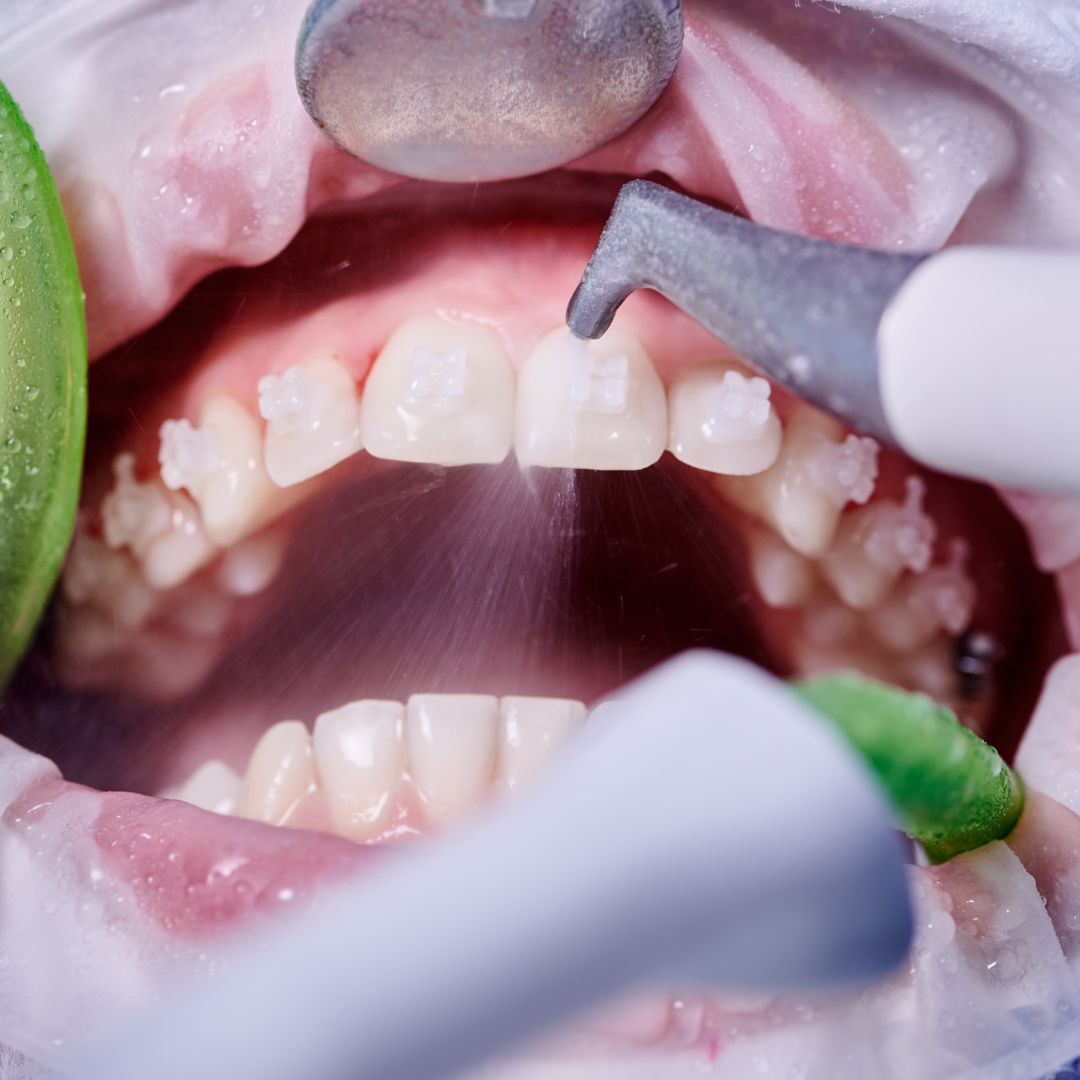
The dental hygienist uses specialized instruments to carefully remove plaque and hardened tartar from the tooth surfaces.
Cleaning may take place:
- Above the gumline
- Along the gumline
- Between teeth
- Around existing dental work
- In other areas where deposits have accumulated
You may hear scraping or tapping sounds during this process. While the sounds can seem unusual, the procedure is generally straightforward.
If your teeth or gums are particularly sensitive, tell your hygienist. They can often adjust their technique and discuss ways to make you more comfortable.
Step 5: Cleaning Between the Teeth
Cleaning between your teeth is an important part of maintaining oral health.
Toothbrush bristles cannot effectively reach every surface between tightly spaced teeth. That’s why the ADA recommends interdental cleaning as part of daily oral hygiene.
During a professional cleaning, your dental hygienist may clean between teeth using floss or another appropriate interdental technique.
They may also show you techniques you can use at home.
Step 6: Polishing the Teeth
After plaque and tartar have been removed, your hygienist may polish your teeth using a professional polishing tool and paste.
Polishing helps remove certain surface stains and leaves the teeth feeling smooth and clean.
The smooth feeling isn’t just cosmetic. When tooth surfaces are clean and smooth, it can be easier to maintain good oral hygiene at home.
Step 7: Fluoride Treatment When Appropriate
Depending on your age, cavity risk, and individual oral-health needs, your dentist or hygienist may recommend fluoride.
Fluoride helps strengthen tooth enamel and can support cavity prevention.
Not every patient needs the same preventive treatments. Your dental team can determine whether fluoride or another preventive measure is appropriate for you.
Step 8: Dentist Examination and Recommendations
Depending on the appointment, the dentist may complete an examination after the cleaning.
Your dentist may evaluate:
- Teeth and existing restorations
- Gum health
- Bite
- Signs of tooth decay
- Areas of sensitivity
- Oral tissues
- Previous dental treatment
If everything looks healthy, you may simply receive recommendations for maintaining your current routine.
If something needs attention, your dentist can explain the finding and discuss appropriate next steps.
How Long Does a Professional Dental Cleaning Take?
A routine professional dental cleaning commonly takes around 30 to 60 minutes, although appointment length varies.
Your appointment may take longer if:
- You have significant tartar buildup
- You have gum disease
- You haven’t had a cleaning in several years
- You have orthodontic appliances
- You have extensive dental restorations
- Additional examinations or X-rays are needed
Your dental office can give you a better estimate based on your specific appointment.

Does a Professional Dental Cleaning Hurt?
For most patients, routine cleaning is comfortable.
However, you may experience some sensitivity or discomfort if you have:
- Sensitive teeth
- Inflamed gums
- Heavy tartar buildup
- Gum recession
- Periodontal disease
Don’t try to tolerate significant discomfort silently.
Let your dental hygienist know if something hurts or feels uncomfortable. They can adjust their approach and help determine why you are experiencing sensitivity.
What Is the Difference Between a Regular Cleaning and a Deep Cleaning?
This is an important distinction.
A routine professional dental cleaning is generally intended for patients who have healthy gums or mild gingivitis and are receiving preventive care.
A deep cleaning, medically known as scaling and root planing, is a periodontal treatment used when gum disease has developed.
During scaling and root planing, dental professionals remove plaque and tartar above and below the gumline and smooth the tooth roots to help the gums reattach. The ADA notes that this treatment may require more than one appointment and may involve local anesthesia.
Routine Cleaning | Deep Cleaning |
Preventive care | Treatment for periodontal disease |
Primarily for healthy gums or mild inflammation | Used when deeper periodontal problems are present |
Removes plaque and tartar | Removes deposits above and below the gumline |
Usually shorter | May require multiple visits |
Generally comfortable | May require local anesthesia |
Regular preventive schedule | Based on periodontal condition |
Your dentist determines which type of cleaning is appropriate after evaluating your gums and overall oral health.
How Often Should You Get a Professional Dental Cleaning?
There is no single schedule that applies to every patient.
Many people receive professional cleanings about every six months, but your ideal schedule depends on your individual risk.
You may need more frequent appointments if you have:
- Periodontal disease
- Frequent cavities
- Heavy tartar buildup
- Poor oral hygiene
- Diabetes
- Tobacco use
- Dry mouth
- Certain medications
- Orthodontic appliances
- A history of oral health problems
Patients with periodontal disease may require more frequent periodontal maintenance based on their condition.
Your dentist or hygienist can recommend an appropriate schedule rather than relying on a one-size-fits-all approach.
What Should You Do After a Professional Dental Cleaning?
After your cleaning, maintaining the results is largely up to your daily habits.
The CDC recommends good oral hygiene practices to help prevent common oral health problems.
At home, remember to:
- Brush twice a day with fluoride toothpaste.
- Clean between your teeth every day.
- Limit frequent sugary foods and drinks.
- Avoid tobacco products.
- Drink water regularly.
- Follow your dentist’s recommendations.
- Keep your recommended dental appointments.
The ADA notes that plaque left behind can harden into tartar, which is why daily plaque removal remains essential between professional cleanings.
What Happens If You Skip Professional Cleanings?
Missing one cleaning doesn’t automatically mean something will go wrong.
The bigger concern is consistently avoiding preventive dental care.
Without regular professional care, plaque and tartar can accumulate. Gum inflammation may develop or worsen, and other dental problems may go unnoticed.
The CDC reports that 20.5% of dentate U.S. adults ages 20–64 had untreated tooth decay based on 2017–March 2020 national surveillance data.
Regular dental care gives your dental team an opportunity to identify problems while they may still be easier to manage.
Professional Dental Cleaning and Overall Oral Health
Professional cleaning is only one part of a healthy smile, but it plays an important preventive role.
The CDC emphasizes that oral health is essential to overall health and well-being and that many oral diseases are largely preventable through a combination of professional care and self-care.
Regular cleanings can therefore be viewed as part of a broader oral-health strategy—not simply a cosmetic service.
Professional Dental Cleaning: Key Benefits at a Glance
A routine professional cleaning can help:
- Remove tartar that brushing cannot remove
- Control plaque buildup
- Support healthier gums
- Reduce the risk of gingivitis
- Remove certain surface stains
- Improve the feeling and cleanliness of your teeth
- Reinforce good home-care habits
- Help your dental team monitor changes in your oral health
Frequently Asked Questions
1. What is a professional dental cleaning?
A professional dental cleaning is a preventive procedure that removes plaque, tartar, and other deposits from your teeth. It may also include polishing and personalized oral-hygiene guidance.
2. How often should I get a professional dental cleaning?
Many patients have cleanings approximately every six months, but the ideal frequency depends on your oral-health needs. Patients with gum disease or higher risk may require more frequent care.
3. Does a dental cleaning remove tartar?
Yes. Professional dental instruments are used to remove hardened tartar that cannot be removed effectively with normal brushing and flossing.
4. Is professional dental cleaning painful?
Most routine cleanings are comfortable. Some patients may experience sensitivity or discomfort, particularly if they have inflamed gums, gum recession, or significant tartar buildup. Tell your hygienist if you are uncomfortable.
5. What is the difference between a cleaning and a deep cleaning?
A routine cleaning is primarily preventive. A deep cleaning, or scaling and root planing, is a periodontal treatment designed to remove deposits from above and below the gumline when gum disease is present.
6. How long does a dental cleaning take?
A routine cleaning often takes approximately 30–60 minutes, although the time can vary depending on your oral health and whether additional services are needed.
7. Can professional cleaning whiten my teeth?
A cleaning can remove some surface stains and make teeth appear cleaner and brighter. However, professional dental cleaning is not the same as cosmetic teeth-whitening treatment.
8. Can I brush and floss instead of getting professional cleanings?
Daily brushing and interdental cleaning are essential, but they cannot remove hardened tartar. Professional cleanings complement—not replace—your home oral-care routine.
Conclusion
A professional dental cleaning is much more than a quick polish. It is an important component of preventive oral healthcare that helps remove plaque and tartar, support healthy gums, and give your dental team an opportunity to monitor your oral health.
While brushing and cleaning between your teeth every day are essential, some deposits cannot be removed effectively at home. Professional care helps fill that gap.
The right cleaning schedule also isn’t identical for everyone. Your dentist can consider your cavity risk, gum health, medical history, and previous dental concerns when determining how frequently you should return.
If you’re overdue for a cleaning, don’t wait until your teeth hurt. A preventive appointment can help you stay ahead of potential problems and maintain a healthier smile over time.