Orthodontics Guide - Olathe, KS
Clear Aligners for Adults in Olathe: What to Know Before You Start
Quick answer
Clear aligners straighten teeth using a series of custom removable trays, each shifting teeth slightly closer to the planned result. They work well for mild to moderate crowding, spacing, and relapse after childhood braces. The real difference between dentist-supervised aligners and mail-order kits is the exam and X-rays that come first, confirming your teeth and gums can safely handle movement. Dr. Warya at Mur-Len Family Dentistry in Olathe, KS can assess your case. Call (913) 353-4001.
A large share of the adults asking about aligners at Mur-Len Family Dentistry in Olathe, KS had braces as teenagers. The teeth drifted back over ten or twenty years, usually because the retainer got lost somewhere along the way, and now the lower front teeth have crowded again. The second most common group never had orthodontic treatment at all and has finally reached a point where it feels worth doing.
Both are entirely reasonable reasons. This guide covers what actually matters before you commit, including the parts marketing tends to skip.
How clear aligners work
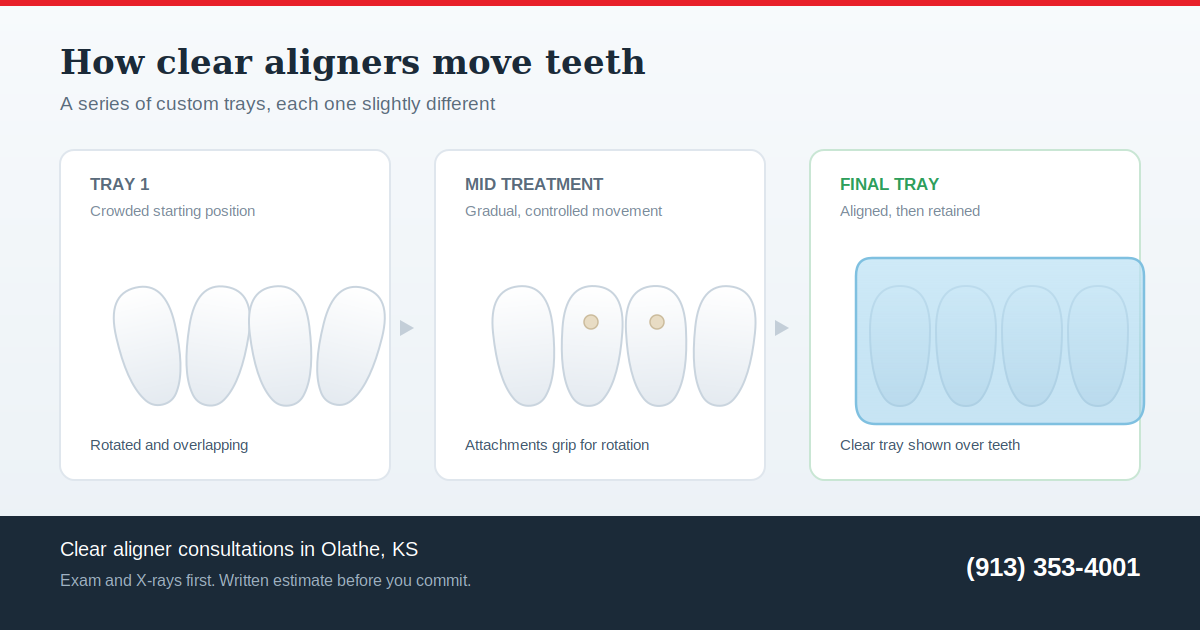
Treatment starts with a digital scan of your teeth. That scan becomes a three-dimensional plan mapping how each tooth needs to move and in what order. A series of trays is manufactured from that plan, each slightly different from the last. Wearing them in sequence applies gentle, controlled pressure that moves teeth a fraction of a millimeter at a time.
You change trays roughly every one to two weeks. Some cases need small tooth-colored attachments bonded to a few teeth to give the aligner something to grip for specific movements, particularly rotations. Those come off when treatment finishes.
Aligners, braces, and mail-order kits compared
Comparing options for adult tooth straightening
| Dentist-supervised aligners | Traditional braces | Mail-order aligner kits | |
|---|---|---|---|
| Exam and X-rays first | Yes, always | Yes, always | No |
| In-person monitoring | Yes, at regular checks | Yes, at adjustments | Remote only |
| Best suited to | Mild to moderate cases | Complex bite and rotation cases | Very minor cosmetic changes |
| Removable | Yes | No | Yes |
| Visibility | Minimal | Visible | Minimal |
| Plan adjusted if teeth do not track | Yes | Yes | Limited |
The row worth pausing on is the first one. Moving teeth that sit in bone affected by untreated gum disease, or teeth with active decay or existing root problems, can make those conditions worse. An exam and X-rays before treatment are not a formality. They determine whether aligners are safe for you at all, and they are the step mail-order kits skip by design.
Who is a good candidate for clear aligners
Clear aligners tend to work well for:
- Mild to moderate crowding of the front teeth
- Gaps and spacing between teeth
- Relapse after braces earlier in life
- Mild bite irregularities
- Adults who cannot accommodate visible braces professionally
They are less suited to, or sometimes unsuitable for:
- Significant bite correction or substantial jaw discrepancies
- Teeth requiring large rotations or vertical movement
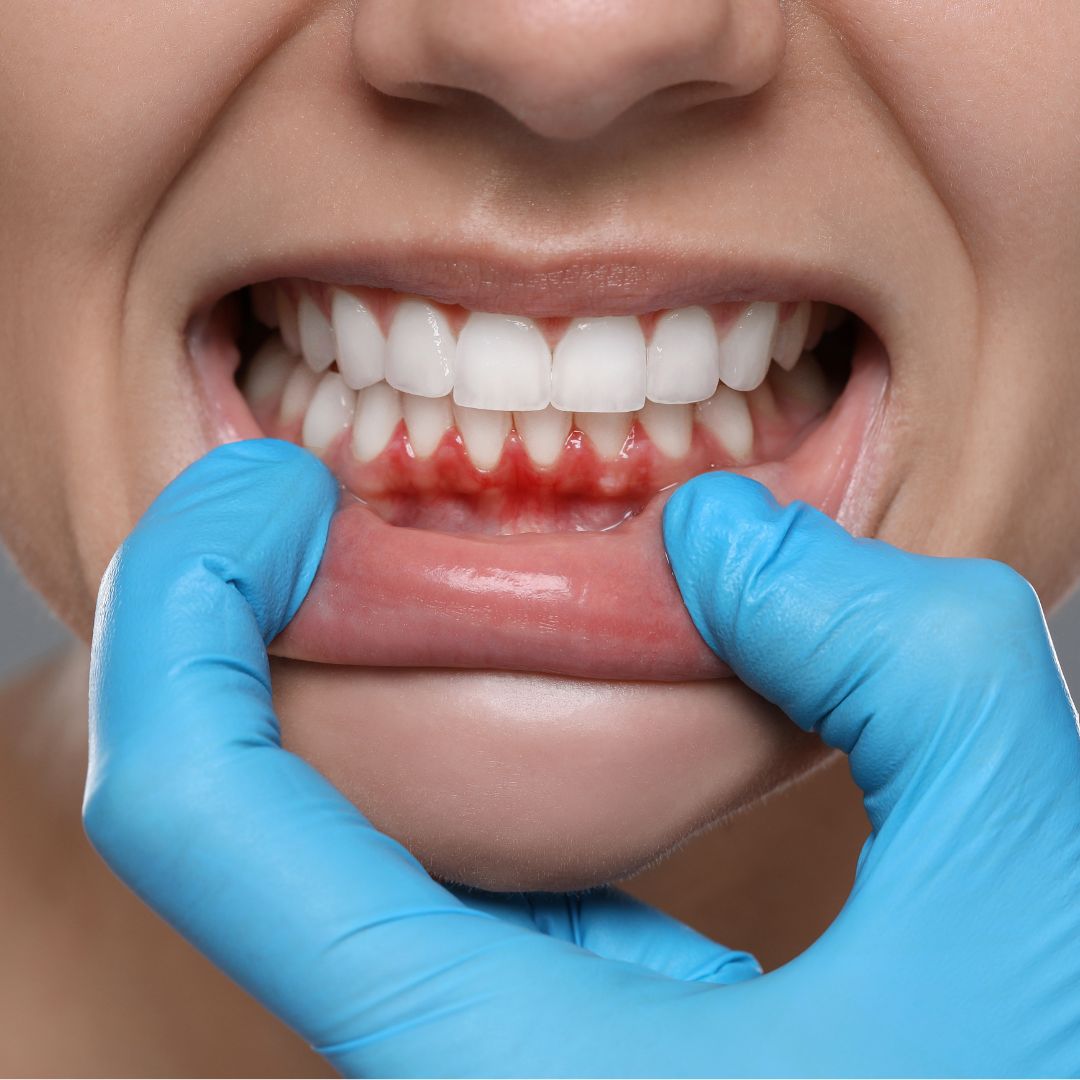
- Patients with untreated gum disease or active decay, until that is resolved first
- Anyone unwilling to wear trays 20 to 22 hours a day
That last point decides more outcomes than any other. Aligners only move teeth while they are in your mouth. Treatment meant to take nine months routinely stretches past a year when trays spend evenings on the counter.
Not sure whether aligners fit your case?
Only an exam and imaging can tell you. Dr. Warya will show you what your teeth actually need, tell you honestly if a specialist is the better route, and give you the cost in writing before you commit to anything.
Where a general dentist fits, and where an orthodontist does
Mur-Len Family Dentistry is a general and family dental practice, and Dr. Warya is a certified Angel Aligner provider. Straightforward adult cases involving crowding, spacing, and post-braces relapse are handled here alongside the rest of your dental care, which is convenient when a tooth needs a filling or a crown partway through treatment.
Cases involving significant skeletal bite correction, complex rotations, or surgical orthodontic planning are referred to an orthodontist, a specialist who completes additional residency training in tooth movement. If your case belongs with a specialist, you will be told that at the consultation rather than after treatment has started and stalled.

What treatment actually looks like, step by step
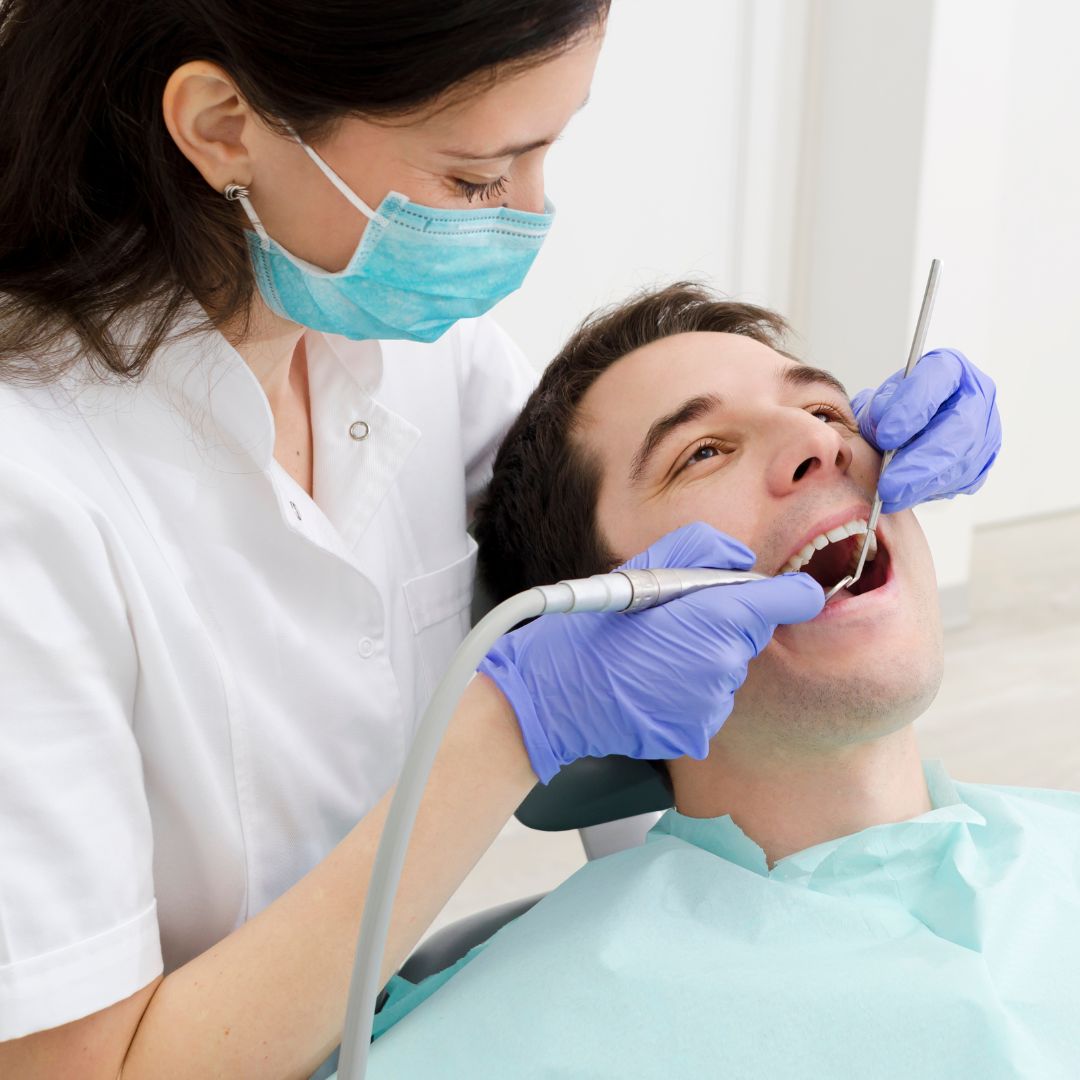
- Consultation and exam. A clinical exam and X-rays confirm your teeth and gums are healthy enough for movement. Any decay or gum disease is addressed first.
- Digital scan and plan. A scan produces your treatment plan and a preview of the expected result.
- Written estimate. You get your cost and any insurance benefit in writing before anything is ordered.
- Trays and attachments. Your first trays are fitted, along with any attachments your case requires.
- Progress checks. Periodic visits confirm teeth are tracking to plan, with adjustments if they are not.
- Retention. Treatment ends with a retainer, which is what holds the result long term.
The part people underestimate: retainers
Teeth drift. That tendency is strongest in the first year after treatment but never fully goes away, which is why retainers are worn indefinitely at night rather than for a few months. The adults now seeking aligner treatment because their childhood braces relapsed are, almost without exception, people who stopped wearing a retainer. Plan for it from the start and you will not repeat the cycle.
Cost and insurance
Cost scales with how much movement your case needs and how many trays that requires, so any number quoted before an exam is guesswork. Some dental plans include an orthodontic benefit that applies to adults, frequently structured as a lifetime maximum rather than an annual one, which is worth checking because it does not reset each year. Details on coverage and payment options are on our insurance and payment page.
You will receive a written estimate showing your expected out-of-pocket cost before treatment begins. No surprises partway through.
Serving Olathe and Johnson County
Mur-Len Family Dentistry offers clear aligner treatment and full cosmetic dentistry at 1717 S Mur-Len Road in Olathe, with Saturday appointments by appointment only. The practice serves Olathe and surrounding Johnson County communities including Overland Park, Lenexa, Shawnee, Gardner, and Spring Hill.
Find out whether aligners fit your case
A consultation tells you what your teeth need, what it would take, and what it would cost, in writing, before you commit. New patients welcome.
Frequently asked questions
Are clear aligners as effective as traditional braces?
For mild to moderate crowding, spacing, and relapse after childhood braces, clear aligners produce results comparable to traditional braces. Braces keep an advantage in complex cases involving significant bite correction, large tooth rotations, or movement that changes the vertical position of teeth. The honest answer depends on your specific case, which is why an exam and X-rays come before any recommendation. Dr. Warya at Mur-Len Family Dentistry in Olathe can tell you which fits. Call (913) 353-4001.
How are dentist-supervised aligners different from mail-order kits?
Mail-order aligner companies work from impressions or scans you take yourself, with no in-person exam and no X-rays. That matters because untreated decay, active gum disease, or existing root problems can be made worse by moving teeth. Dentist-supervised treatment starts with an exam and imaging confirming your teeth and gums can safely tolerate movement, then monitors progress in person. Mur-Len Family Dentistry in Olathe provides supervised aligner care. Call (913) 353-4001.
How long does clear aligner treatment take?
Most adult cases run between six and eighteen months, with minor corrections finishing faster and more involved cases taking longer. The largest variable is wear time. Aligners are designed to be worn 20 to 22 hours a day and removed only for eating, drinking anything other than water, and brushing. Patients who consistently fall short extend their own treatment, sometimes considerably. Dr. Warya at Mur-Len Family Dentistry in Olathe can estimate your timeline. Call (913) 353-4001.
Do clear aligners hurt?
Most people describe pressure and tightness rather than pain, concentrated in the first day or two after switching to a new tray. That sensation is the aligner doing its work. Over-the-counter pain relief is usually enough if you want it. Some patients notice a slight lisp during the first week that resolves as the tongue adapts. Discomfort that is sharp, persistent, or localized to one tooth is worth a call. Reach Mur-Len Family Dentistry in Olathe at (913) 353-4001.
Will I need a retainer after clear aligners?
Yes, and it is not optional. Teeth drift back toward their original positions, especially during the first year after treatment ends, and retainers are what hold the result. Most patients wear one full time briefly, then switch to nights indefinitely. Skipping retainer wear is the single most common reason people find themselves considering aligner treatment a second time years later. Dr. Warya at Mur-Len Family Dentistry in Olathe will fit yours. Call (913) 353-4001.
How much do clear aligners cost in Olathe, KS?
Cost depends on how much movement your case requires and how many trays that takes, so a meaningful number requires an exam. Some dental plans include an orthodontic benefit that applies to adults, often as a lifetime maximum rather than an annual one, which is worth checking because it does not reset. Mur-Len Family Dentistry in Olathe provides a written estimate showing your out-of-pocket cost before treatment begins. Call (913) 353-4001.
About Mur-Len Family Dentistry
Mur-Len Family Dentistry is a full-service dental practice in Olathe, KS, providing comprehensive family, cosmetic, and restorative dentistry for patients of all ages across Johnson County. To schedule a visit, call (913) 353-4001.
Medical sources
- American Dental Association (ADA) - orthodontic treatment and clear aligners
- American Association of Orthodontists - aligner treatment and supervision
- American Dental Association - guidance on direct-to-consumer orthodontics
This article is for general educational purposes and is not a substitute for professional dental advice, diagnosis, or treatment. Whether clear aligners are appropriate for you can only be determined by a clinical exam and imaging. Always consult Dr. Navkiran Warya or a qualified dentist about your specific situation.