Tooth Replacement Guide - Olathe, KS
Dental Implants vs. Dentures vs. Bridges: Which Is Right for You?
Quick answer
The best way to replace a missing tooth depends on your budget, bone health, and how many teeth are missing. Dental implants last the longest and feel most natural but cost more upfront. Bridges are fixed and faster but rely on neighboring teeth. Dentures are the most affordable and replace many teeth at once but are removable. Dr. Warya at Mur-Len Family Dentistry in Olathe, KS can help you choose. Call (913) 353-4001.

Losing a tooth, or several, is more common than most people realize, and the good news is that you have excellent options for replacing it. But which one is right for you? At Mur-Len Family Dentistry in Olathe, KS, patients ask this question every week, and the honest answer is that it depends on your specific situation: how many teeth you are missing, the health of your jawbone and remaining teeth, your budget, and your priorities. This guide walks through the three main tooth-replacement options so you can go into your consultation informed.
The three main ways to replace a missing tooth
There are three time-tested solutions for replacing missing teeth, and each suits different needs:
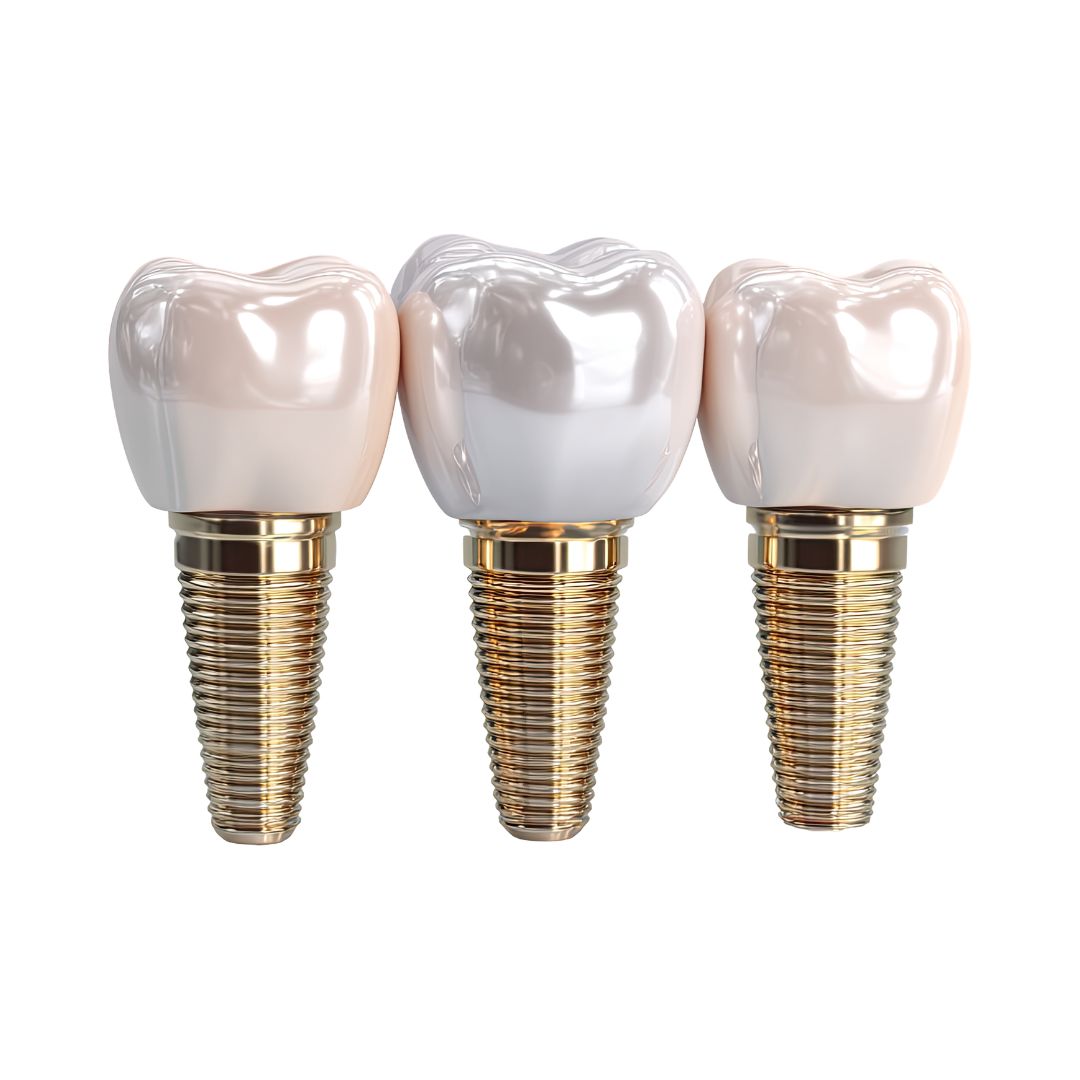
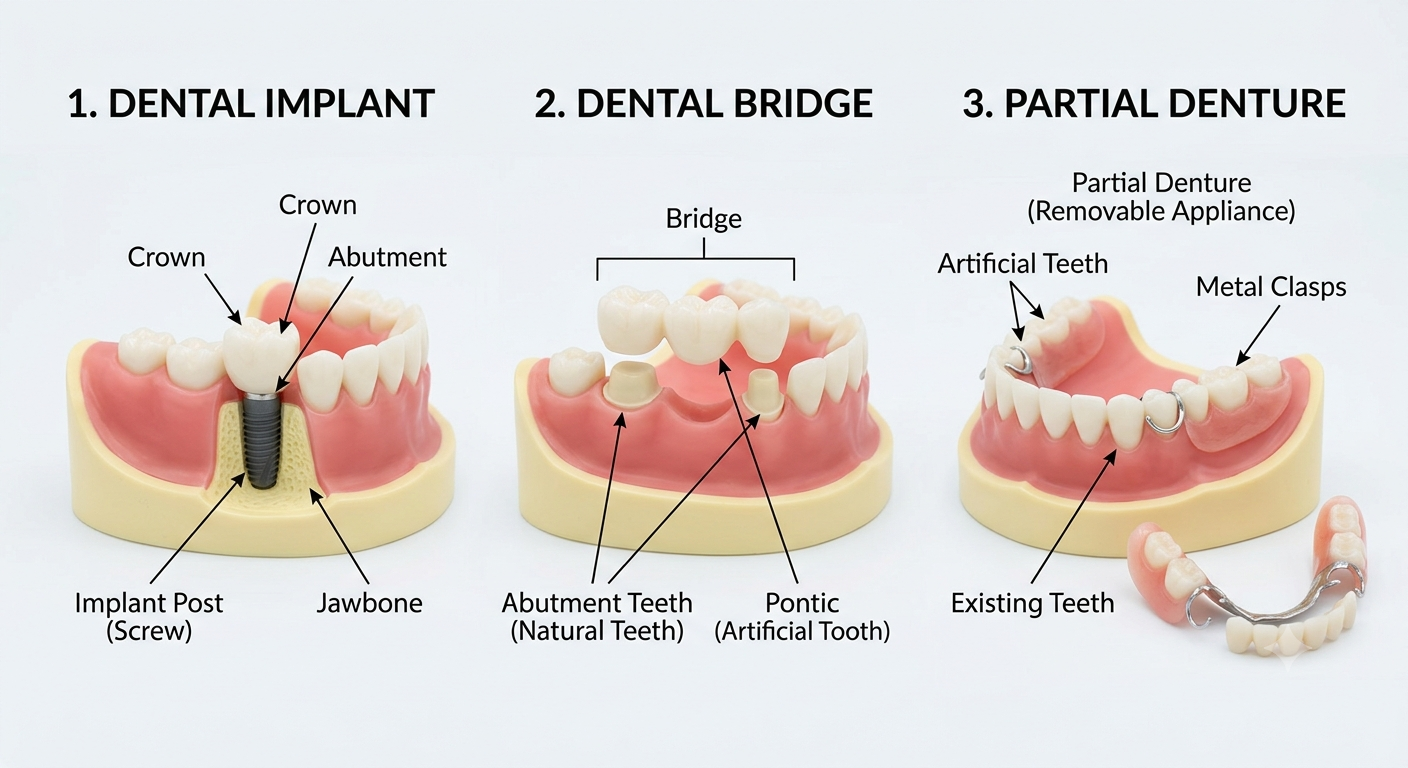
- Dental implants - a titanium post placed in the jaw that acts as an artificial tooth root, topped with a crown
- Dental bridges - a fixed replacement tooth anchored to the natural teeth on either side of the gap
- Dentures - removable appliances that replace many teeth or a full arch at once
Below, we compare them head to head so the differences are clear.
Quick comparison at a glance
| Dental implant | Dental bridge | Denture | |
|---|---|---|---|
| Best for | One or more missing teeth, good bone | One or a few missing teeth in a row | Many missing teeth or a full arch |
| Fixed or removable | Fixed (permanent) | Fixed (permanent) | Usually removable |
| Feels most natural | Yes, most natural | Very natural | Less so, improving with fit |
| Preserves jawbone | Yes | No | No |
| Affects neighboring teeth | No | Yes, they are reshaped | No |
| Typical longevity | Decades, often lifetime | Around 10-15 years | 5-10 years, may need relining |
| Upfront cost | Highest | Moderate | Most affordable |
Dental implants: the closest thing to a natural tooth
A dental implant replaces both the root and the crown of a missing tooth. A small, biocompatible titanium post is placed into the jawbone, where it fuses with the bone over time to form a stable foundation, and a natural-looking crown is attached on top. Because the implant integrates with your bone, it is the only option that actually preserves the jawbone, which naturally shrinks when a tooth is missing.
The advantages: implants look, feel, and function like natural teeth, restore full chewing power, do not affect neighboring teeth, and can last a lifetime with good care. Mur-Len also offers full-arch solutions like All-on-4 and All-on-X for patients missing most or all of their teeth.
The trade-offs: implants require adequate jawbone and healthy gums, the process takes several months as the implant fuses with the bone, and the upfront cost is higher than other options, though their longevity often makes them the best long-term value.
Dental bridges: a fixed, faster option
A dental bridge literally bridges the gap left by one or more missing teeth. A replacement tooth is held in place by crowns on the natural teeth on either side of the gap. It is a fixed, non-removable solution that restores your ability to chew and speak and keeps your remaining teeth from shifting.
The advantages: bridges are completed faster than implants (typically a couple of visits), do not require surgery, and look and feel natural. At Mur-Len, CEREC technology even allows for same-day crowns in many cases.
The trade-offs: a bridge requires reshaping the healthy teeth on either side of the gap to support the crowns, it does not prevent jawbone loss under the missing tooth, and it typically needs replacement after 10 to 15 years.
Dentures: the most affordable, and better than ever
Dentures are removable appliances that replace multiple missing teeth or a complete arch. Modern dentures are more comfortable and natural-looking than the ones many people picture, and they remain the most accessible option, especially when many teeth are missing.
The advantages: dentures are the most affordable way to replace many teeth at once, require no surgery, and can be made relatively quickly. Partial dentures also help keep remaining natural teeth from shifting.
The trade-offs: dentures are removable and can feel less stable than fixed options, they do not prevent jawbone loss, and they may need relining or replacement over time as your mouth changes. For patients who want more stability, implant-supported dentures combine the affordability of dentures with the security of implants.
Not sure which is right for you?
The best choice depends on factors only an exam can reveal, including your jawbone health and the condition of your remaining teeth. Dr. Warya will walk you through your options honestly, with no pressure, and recommend what genuinely fits your needs and budget.
How to decide: questions to ask yourself
As you think it through, consider these questions, which Dr. Warya will also discuss with you:
- How many teeth are you missing? A single tooth points toward an implant or bridge; many teeth may point toward dentures or implant-supported options.
- How is your jawbone? Implants need adequate bone; if bone has been lost, other options or bone grafting may be discussed.
- What is your budget and timeline? Bridges and dentures cost less upfront and are completed faster; implants are a larger investment with the longest lifespan.
- How important is preserving bone and avoiding work on other teeth? If that matters most, implants have a clear edge.
Why patients choose Mur-Len for tooth replacement in Olathe
Dr. Warya provides all three options under one roof, including implant placement and full-arch restoration, with on-site 3D Cone Beam CT imaging for precise implant planning and CEREC technology for efficient crowns and bridges. That means you get honest guidance across every option and coordinated care without being referred elsewhere. The practice serves Olathe and the surrounding Johnson County communities including Overland Park, Lenexa, Shawnee, Gardner, and Spring Hill.
Explore your tooth replacement options in Olathe
Dr. Warya will help you compare implants, bridges, and dentures and choose what fits your smile and budget. New patients welcome.
Frequently asked questions
Which is better: a dental implant or a bridge?
How much do dental implants cost compared to dentures and bridges?
Do dentures or bridges prevent bone loss like implants?
How long does each tooth replacement option last?
Can I replace all my teeth with implants?
Does insurance cover tooth replacement?
Medical sources
- American Dental Association (ADA) - dental implants, bridges, and dentures
- American Academy of Implant Dentistry - implant benefits and bone preservation
- American College of Prosthodontists - tooth replacement options
This article is for general educational purposes and is not a substitute for professional dental advice, diagnosis, or treatment. Tooth-replacement recommendations depend on an individual exam. Always consult Dr. Navkiran Warya or a qualified dentist about your specific situation.